2008 Books
Our high level microbiology and molecular biology books bring together expert international authors under the skilled editorship of leading scientists to produce state-of-the-art compendiums of current research. Aimed at the research scientist, graduate student, medical reseacher and other professionals, these books are highly recommended for all microbiology and molecular biology laboratories. Every microbiology, molecular biology and bioscience library should have a copy of each of our books.
Library recommendation form

Edited by: Georg Lipps
Published: 2008
ISBN: 978-1-904455-35-6
Price: GB £159 or US $319
Written by acknowledged experts in the field, this volume provides an up to date treatment of the structure, function and application of plasmids with a particular emphasis on current and future trends. The book is aimed primarily at research scientists, graduate students and professional scientists but will also be of great interest to all molecular biologists and microbiologists involved in research or teaching. Chapters include a historical perspective on E. coli plasmids and the scientific background of the plasmids used routinely in laboratories to clone genes and to express proteins; an overview on the plasmids of archaea and eukarya; bioinformatic tools; horizontal gene transfer and the process of DNA transfer. Two entire chapters are devoted to the important medical applications of plasmids, including the correction of gene defects and vaccines to treat cancer or infectious diseases. An essential book for all molecular biology laboratories. read more ...

Edited by: Peter Kuhnert and Henrik Christensen
Published: 2008
ISBN: 978-1-904455-34-9
Price: GB £159 or US $319
Pasteurellaceae comprise a large and diverse family of Gram-negative bacteria with members ranging from important pathogens such as Haemophilus influenzae to commensals of the animal and human mucosa. Information on the biology of these organisms has mushroomed in recent years, driven by the development of novel genetic and molecular methodologies. Since 1995, the family has been expanded from three genera to the current thirteen through the use of new genetic-based classification and identification technologies. Many members of the Pasteurellaceae family make excellent natural models for the study of bacterial pathogenesis and host-pathogen-interactions thus giving valuable insights into related human diseases. Research in this area is at a very exciting stage. In this timely book, leading international Pasteurellaceae scientists critically review the most important current research providing an up-to-date review of the molecular biology, genomics and virulence of these fascinating organisms. Topics covered include taxonomy and biodiversity, phylogeny, comparative genomics, competence, DNA uptake and transformation, proteomics and protein secretion, RTX toxins, lipopolysaccharides, biofilms, quorum sensing, antimicrobial resistance, diagnosis, and OMP and iron uptake. Each chapter is independent and can be read in isolation and as a whole the book provides an important resource summarising our current knowledge of Pasteurellaceae genomics and molecular biology. Essential reading for everyone working on Pasteurellaceae and related organisms. read more ...
Edited by: Shah M. Faruque and G. Balakrish Nair
Published: 2008
ISBN: 978-1-904455-33-2
Price: GB £159 or US $319
Written by leading V. cholerae experts, the chapters review the most important cutting-edge genetic facets of V. cholerae including its genomic organization, population genetics, molecular epidemiology, and synchronized regulation of gene expression. Other topics include the molecular basis for enhanced transmissibility of cholera during epidemics, survival of the pathogen in the environment, and above all the evolution of the species to attain increased fitness both as a pathogen and an environmental organism. Essential reading for everyone with an interest in Vibrio and recommended reading for other scientists working in microbial pathogenesis, microbial genomics and antimicrobial research. read more ...
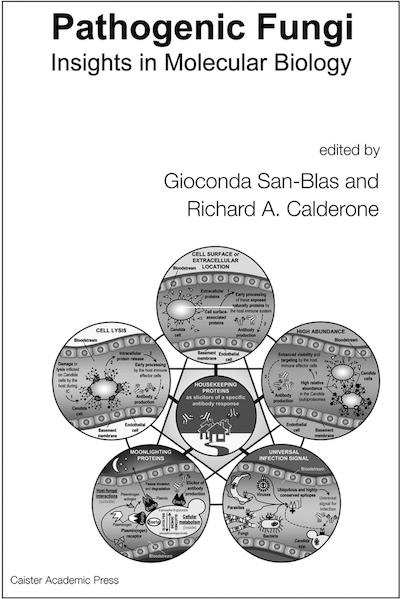
Edited by: Gioconda San-Blas and Richard A. Calderone
Published: 2008
ISBN: 978-1-904455-32-5
Price: GB £159 or US $319
In this book a panel of expert international mycologists critically review the most important cutting-edge topics. Chapters are written from a molecular and genomic perspective and through the provision of extensive reference sections positively encourage readers to pursue the subject in greater detail. Topics include: gene expression and regulation, heterozygosity in Candida, molecular diagnosis, regulation of the host-fungal interaction, the development of anti-fungals, signal transduction, and mechanisms of multi-drug resistance. Essential reading for everyone with an interest in pathogenic fungi including: mycologists, biotechnologists, molecular biologists, and pharmaceutical and biotechnology companies. read more ...
Edited by: Yoshio Yamaoka
Published: 2008
ISBN: 978-1-904455-31-8
Price: GB £159 or US $319
A useful introduction to the subject for new researchers and an invaluable reference for the experienced researcher, this book is essential reading for all researchers working with Helicobacter and related organisms. read more ...
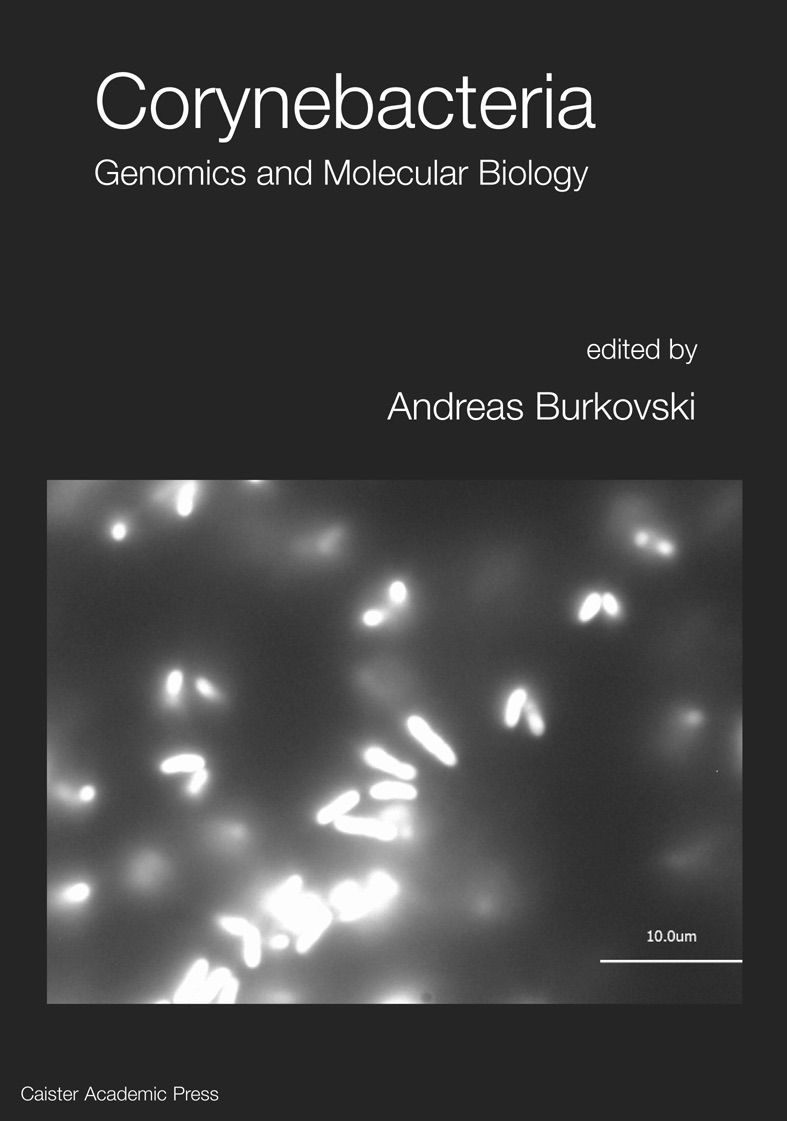
Edited by: Andreas Burkovski
Published: 2008
ISBN: 978-1-904455-30-1
Price: GB £159 or US $319
This volume brings together the expertise and enthusiasm of today's leading experts to provide a description of the current state-of-the-art molecular biology toolbox available for Corynebacterium research, including global analyses techniques such as comparative genomics, transcriptome, proteome and metabolome analysis as well as the most recent knowledge on Corynebacterium promoter structures and vector systems. Furthermore, topics such as regulatory networks controlling carbon, nitrogen, phosphorus, sulphur and iron metabolism, cell wall structure, proteolysis and environmental stress response are covered. Essential reading for all Corynebacterium scientists and everyone with an interest in global analysis techniques, global regulation and systems biology. read more ...

Edited by: Jodi Lindsay
Published: 2008
ISBN: 978-1-904455-29-5
Price: GB £159 or US $319
This volume, the first to focus on staphylococcal genetics, brings together the expertise and enthusiasm of an international panel of leading staphylococcal researchers to provide a state-of-the art overview of the field. Topics include the sequencing projects, including spin-off microarray and systems biology tools, epidemiology, evolution, manipulation of the genome, diagnostics, gene expression due to global regulators and environmental triggers, cell-wall synthesis, coagulase-negative species, and animal pathogens. It is designed for two major audiences. Firstly, to introduce the subject to new researchers, including those unfamiliar with genetics. Secondly, for established researchers, for whom it will serve as an invaluable reference and summary of a large field, as well as presenting the latest advances and future trends written by those who are developing them. Essential reading for anyone involved in Staphylococcus research. read more ...

Edited by: Peter J. Myler and Nicolas Fasel
Published: 2008
ISBN: 978-1-904455-28-8
Price: GB £159 or US $319
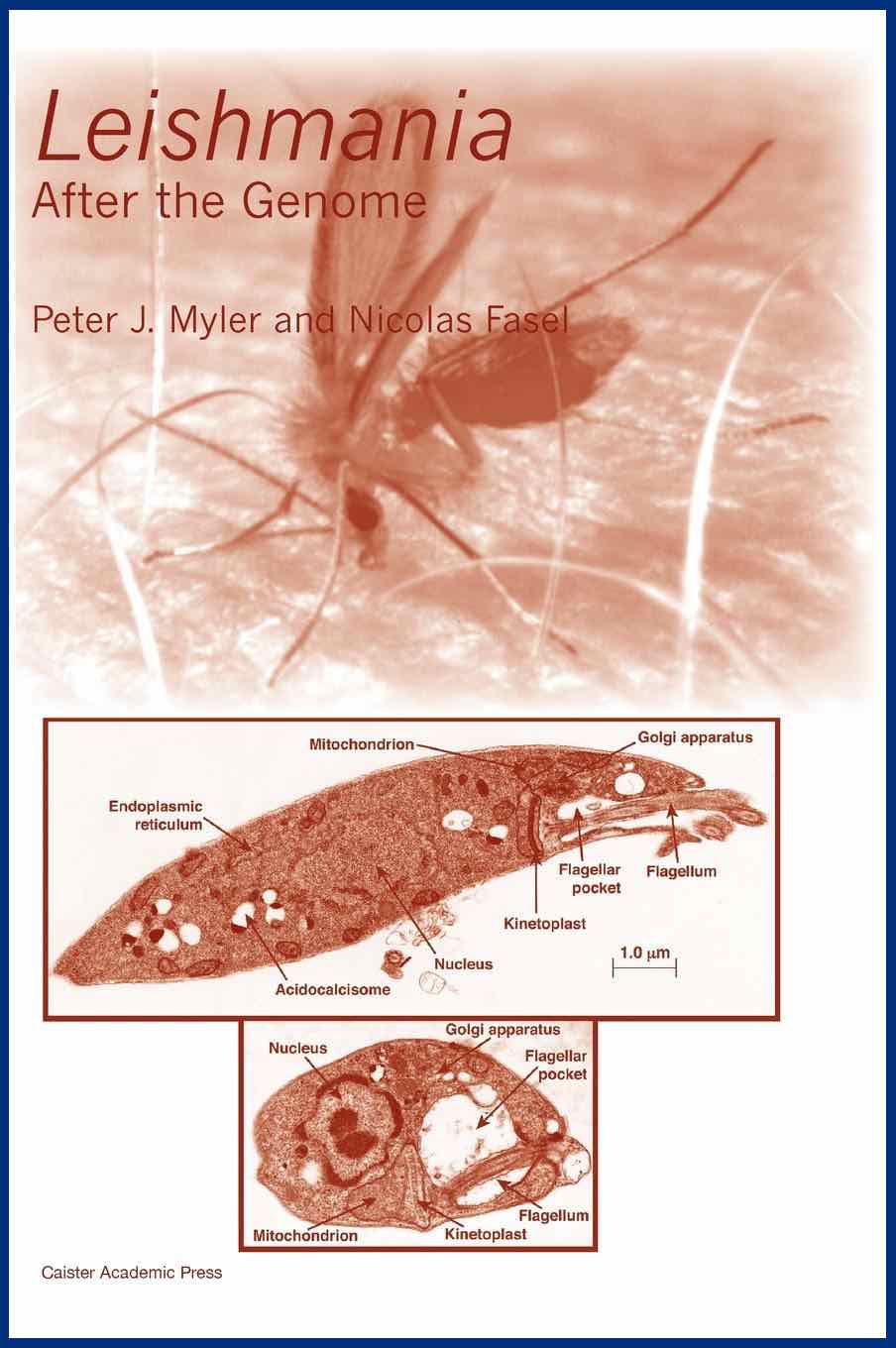
Leishmania is a vector-borne pathogenic parasite found in 88 countries worldwide and is the causative agent of leishmaniasis. The different Leishmania species infect macrophages and dendritic cells of the host immune system, causing symptoms that range from disfiguring cutaneous and mucocutaneous lesions, widespread destruction of mucous membranes, or visceral disease affecting the haemopoetic organs. The recent publication of the complete genome sequences of three different Leishmania species provides new insights into this leading pathogen and presents scientists with an exciting resource to improve the understanding of its complex molecular and cellular biology. In this book, internationally recognised Leishmania experts critically review the most important aspects of current Leishmania research, providing the first coherent picture of the organism's molecular and cellular biology since the publication of the genome sequence. Chapters are written from a molecular and genomic perspective and discuss in depth Leishmania-specific aspects of trypanosomatid biology and pathology. Topics include: diagnosis and epidemiology, genome structure and content, regulation of gene expression, the Leishmania proteome, the Leishmania metabolome, Leishmania differentiation, interaction with the sand fly vector, drug discovery, drug resistance, and much more. Essential reading for all researchers working with Leishmania, trypanosomes and protozoa. A recommended book for all biology and medical libraries. read more ...

Edited by: Paul Blum
Published: 2008
ISBN: 978-1-904455-27-1
Price: GB £159 or US $319
A conventional view delineates cellular life into only two basic types called prokaryotes and eukaryotes. The prokaryotes are further subdivided into the Bacteria and the Archaea based on small subunit ribosomal RNA comparisons and conserved mechanisms for information processing. The study of archaeal prokaryotes has matured rapidly in part initiated by genomic science as well as a continuing interest in the biochemistry and metabolism of extremophiles. The authors present an expanding pattern of new information relevant to both the general and the technical reader. The book focuses on molecular biology and genomics and topics include the biology of metals, redox chemistry, respiration, sugar catabolism, nucleic acid modification, DNA replication, repair and recombination, transcriptomics, signal transduction and peptide antibiotics. Throughout the well referenced text the emphasis is on emerging topics in specific fields providing the reader with a vision of the future in the expanding world of Archaea. Essential reading for all archaea researchers and everyone with an interest in prokaryote molecular and cellular biology. A recommended book for all microbiology libraries. read more ...

Edited by: Klaus Heuner and Michele Swanson
Published: 2008
ISBN: 978-1-904455-26-4
Price: GB £159 or US $319
Legionellosis is a disease of significant medical and public interest. Legionella is commonly found in aquatic habitats where its ability to survive and to multiply within different protozoa equips the bacterium to be transmissible and pathogenic to humans. In addition Legionella has become a favored model system to analyse the mechanisms of bacterial survival, acquisition of nutrients and intracellular replication. Following the recent publication of the genome sequences of four L. pneumophila strains it is now feasible to investigate the whole genome in silico, the transcriptome via micro arrays and the proteome by two-dimensional gel electrophoresis. Research in the fields of clinical features, diagnosis, treatment and epidemiology continues to generate new data. The topics covered by this volume range from the history of the identification of Legionella and clinical disease treatment, to the microbe's gene expression and secretion systems as well as its strategies for intracellular multiplication and nutrient acquisition. The main focus of the book is the current state of many of the most critical features of Legionella. Internationally renowned authors have contributed chapters describing and discussing the latest research findings with an emphasis on molecular aspects. The editors and authors have produced an excellent book that will be an extremely useful reference source. This comprehensive publication is aimed at readers with teaching or research interests in microbiology, genetics, genomics, infectious diseases or clinical research. A recommended book for all microbiology and clinical research laboratories. read more ...
Edited by: Kevin V. Morris
Published: 2008
ISBN: 978-1-904455-25-7
Price: GB £159 or US $319
The role of RNA in regulating gene expression has become a topic of intense interest. In this book internationally recognized experts in RNA research explore and discuss the methods whereby RNA can regulate gene expression with examples in yeast, Drosophila, mammals, and viral infection, and highlight the application of this knowledge in therapeutics and research. Topics include: gene silencing and gene activation, the hammerhead ribozyme, epigenetic regulation, RNAi, microRNA, and pyknons. This comprehensive publication is intended for readers with teaching or research interests in RNA, the regulation of gene expression, genetics, genomics or molecular biology. read more ...

Edited by: Anthony H. Rogers
Published: 2008
ISBN: 978-1-904455-24-0
Price: GB £159 or US $319
A panel of experts discuss the molecular biology of micro-organisms involved in the two major dental diseases: caries and periodontal disease. Research has focused on factors which might modulate the interaction between the resident oral bacteria and the host. Chapters deal with the interactions of oral micro-organisms with one another and with the host; the innate defence mechanisms of the host; and the development of vaccines against oral diseases. Topics include oral microbial taxonomy, identification and typing, applied genomics, horizontal gene transfer, cell-cell communication, cariogenic bacteria, Aggregatibacter actinomycetemcomitans, Porphyromonas gingivalis, Treponema denticola, host-pathogen interaction, host defense mechanisms, and vaccination against oral infections. Essential reading for students and researchers in the field of oral biology and oral microbiology and a recommended book for all microbiology laboratories. read more ...

Edited by: Jörg Tost
Published: 2008
ISBN: 978-1-904455-23-3
Price: GB £159 or US $319
In this book the molecular mechanisms and biological processes in which epigenetic modifications play a primordial role are described in detail. The first seven chapters describe the different biological mechanisms of the epigenetic machinery including: DNA methylation, histone tails, chromatin structure, nucleosome occupancy, Polycomb group proteins, siRNAs and miRNAs. The following chapters cover the epigenetic systems of plants, the epigenetic profile of embryonic stem cells, cell differentiation, imprinting marks, and random X chromosome inactivation. Further chapters deal with epigenetics in relation to cancers, premature aging, longevity and the developmental origins of disease. The final chapter, describes the fascinating potential transfer of epigenetic information across generations. This up-to-date volume is a major resource for those working in the field and will stimulate readers of all levels to dive into the fascinating and fast moving field of epigenetics. read more ...
Edited by: Thomas C. Mettenleiter and Francisco Sobrino
Published: 2008
ISBN: 978-1-904455-22-6
Price: GB £159 or US $319
In this book an international panel of leading virologists provide a state-of-the-art overview of the field, comprehensively detailing the current understanding of viruses, their replication, evolution and interaction with the host. The authors emphasize strategic and methodological aspects of current research, and provide key related references. Topics include foot-and-mouth disease virus, Pestivirus, Arteriviridae, Coronaviruses (including SARS), Herpesviridae, Paramyxoviridae, influenza viruses, Reoviridae, porcine circoviruses, Asfarviridae and much more. An essential text for all virology laboratories. read more ...
Edited by: John T. Patton
Published: 2008
ISBN: 978-1-904455-21-9
Price: GB £159 or US $319
This timely book brings together all of the key recent research on this disparate group of viruses, providing for the first time a single resource reviewing dsRNA viral structure and molecular biology. Written by well respected and experienced virologists, topics include: the structures of orthoreoviruses, rotavirus, phytoreoviruses, and bluetongue virus, entry into the bacterial cell, crystal structure of reovirus polymerase λ3, assembly of the reovirus genome, genomic RNA packaging and replication in the Cystoviridae, and much more. Essential reading for all dsRNA virologists and all other virologists with an interest in molecular and structural biology. read more ...
Edited by: Ulrike Gerischer
Published: 2008
ISBN: 978-1-904455-20-2
Price: GB £159 or US $319
This concise volume reviews the most current and topical aspects of Acinetobacter genetics and molecular biology and is aimed at a readership of research scientists, graduate students and other specialists. Expert international authors have contributed chapters on diverse topics including taxonomy, lipopolysaccharides, catabolism of aromatic compounds, transformation systems, transcriptional regulation, applications in biotechnology, the molecular basis for virulence and pathogenicity, molecular epidemiology, and antibiotic resistance. This book is highly recommended for anyone involved in Acinetobacter research. read more ...
Edited by: Pierre Cornelis
Published: 2008
ISBN: 978-1-904455-19-6
Price: GB £159 or US $319
The genome sequences of several pseudomonads have become available in recent years and researchers are beginning to use the data to make new discoveries about this bacterium. This concise volume reviews the most current and topical aspects of Pseudomonas molecular biology and genomics and is aimed at a readership of research scientists, graduate students and other specialists. Renowned international authors have contributed chapters on diverse topics including taxonomy, genome diversity, oligonucleotide usage, polysaccharides, pathogenesis, virulence, biofilms, antibiotic resistance and iron uptake. In addition an entire chapter is devoted to the genetic tools being developed to take full advantage of the wealth of information generated by the genome sequencing efforts. This book is essential reading for anyone involved in Pseudomonas research. read more ...
Edited by: Eduardo Díaz
Published: 2008
ISBN: 978-1-904455-17-2
Price: GB £159 or US $319
In this timely book expert international authors critically review all of the most important topics in this exciting field. Although other books covering this are currently available, this book is unique in that it is the first to review the area from a molecular biology and genomics perspective. Topics covered include: aerobic and anaerobic biodegradation of aromatic compounds, molecular detection methods (e.g. microautoradiography, mRNA analyses, etc.), genome-based predictive modelling, elucidation of regulatory networks, bioavailability, chemotaxis and transport issues, functional genomic analyses, natural attenuation, community fingerprinting and metagenomics, biotreatment, and biocatalysts engineering. Essential reading for microbial degradation and bioremediation scientists and of general interest for microbiologists working in field of environmental microbiology. read more ...
Edited by: Antonia Herrero and Enrique Flores
Published: 2008
ISBN: 978-1-904455-15-8
Price: GB £159 or US $319
This volume brings together the expertise and enthusiasm of an international panel of leading cyanobacterial researchers to provide a state-of-the art overview of the field. Topics covered include: evolution, comparative genomics, gene transfer, molecular ecology and environmental genomics, stress responses, bioactive compounds, circadian clock, structure of the photosynthetic apparatus, membrane systems, carbon acquisition, nitrogen assimilation and C/N balance sensing and much more. Essential for anyone with an interest in cyanobacteria, bacterial photosynthesis, bacterial nitrogen fixation, and symbiosis. read more ...